
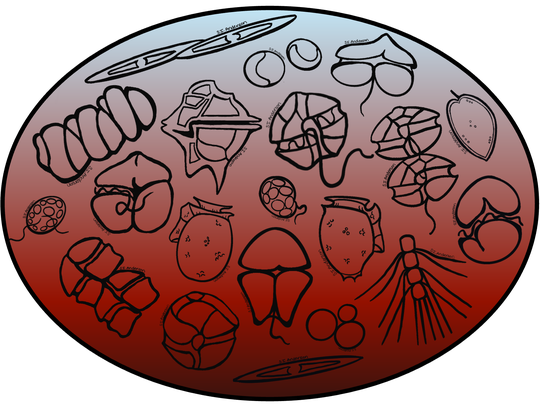
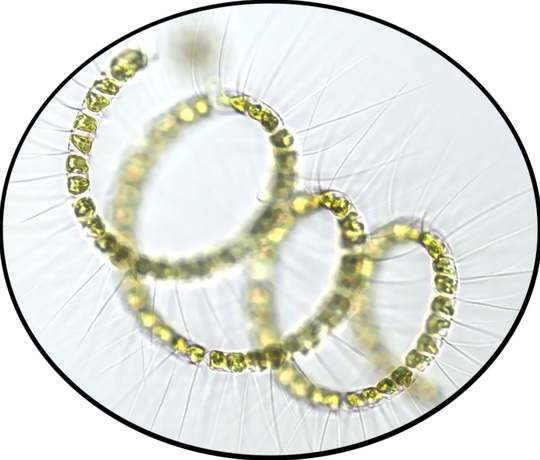
I am a Research Ecologist at the United States Environmental Protection Agency and an Adjunct Researcher at the University of Tasmania where my research focuses on marine algae, including harmful algal bloom (HAB) species, and their community responses to environmental change such as ocean warming, eutrophication, and marine carbon dioxide removal (mCDR) methods. Our collaborative projects use field data, historical observations, and models to discern how changes in ocean chemistry and physical properties may impact water quality and biological productivity.
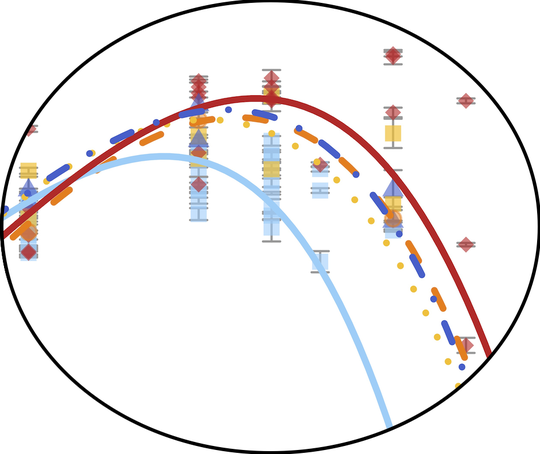
Previously, I was a Simons Foundation Postdoctoral Fellow in Marine Microbial Ecology at the Massachusetts Institute of Technology. I worked under the direction of Dr. Stephanie Dutkiewicz examining phytoplankton thermal trait differentiation in a modeled ocean. For my doctoral dissertation with Dr. Tatiana Rynearson at the University of Rhode Island Graduate School of Oceanography, I employed experimental, molecular, and modeling approaches to investigate the role of temperature in driving phytoplankton physiology, community structure, and biogeography.
- Trait-based ecology
- Phytoplankton
- HABs
- mCDR
-
Ph.D. Oceanography, 2021
University of Rhode Island
-
Teaching Credential, 2013
Loyola Marymount University
-
B.A. Molecular, Cellular & Developmental Biology, 2012
University of Colorado Boulder
Projects
Recent Publications
Contact
- Stephanie.Anderson@utas.edu.au
- Hobart, Tasmania 7000
- Join me on GitHub